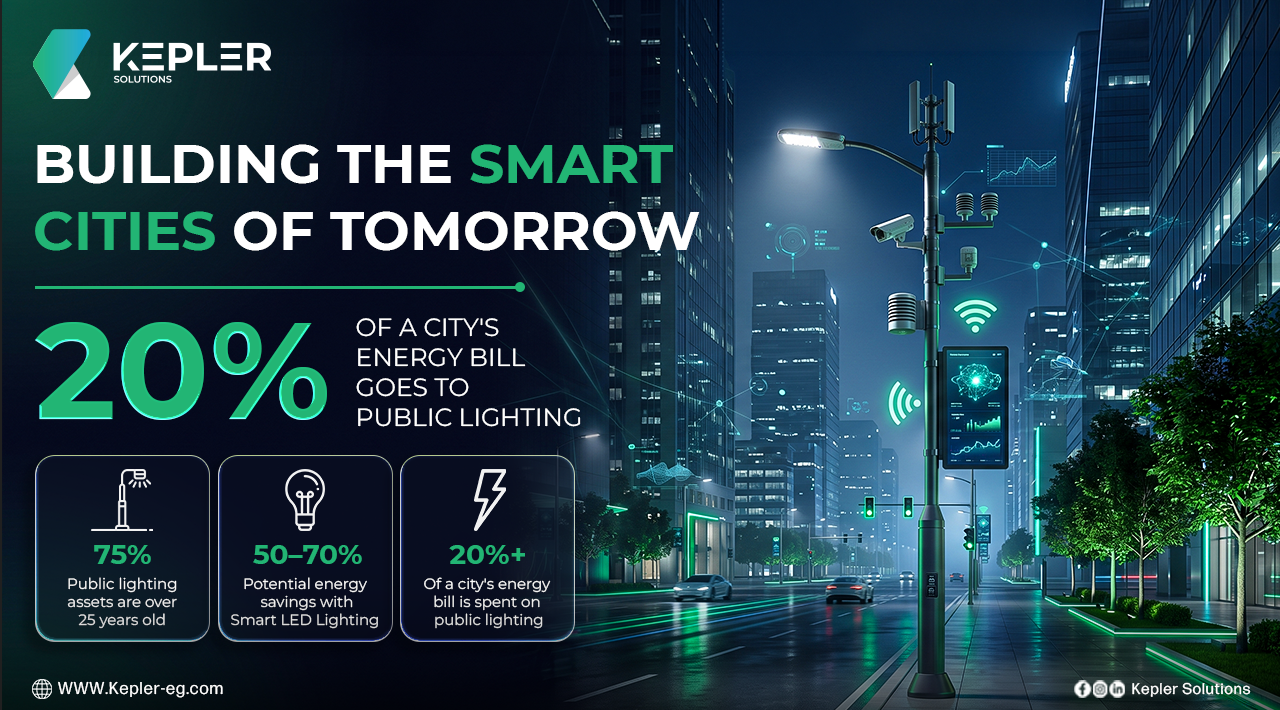
Building the Smart Cities of Tomorrow
Public lighting is one of the most essential components of urban infrastructure, yet it is also one of the most overlooked.
Today, more than 20% of a city's energy bill can be attributed to public lighting systems. At the same time, approximately 75% of public lighting assets are over 25 years old, creating growing maintenance challenges and increasing operational costs.
As cities pursue digital transformation and sustainability goals, traditional lighting systems are no longer enough. Smart Lighting is emerging as one of the most effective ways to modernize urban infrastructure while improving efficiency and service delivery.
From Light to Connectivity
Modern lampposts are no longer limited to providing illumination.
They are rapidly evolving into multi-purpose urban infrastructure capable of supporting a wide range of smart city services through a single connected platform.
A smart pole can integrate:
- Public Wi-Fi connectivity
- EV charging stations
- Air quality monitoring
- Smart surveillance systems
- Digital signage and information displays
This transformation enables cities to maximize the value of existing infrastructure while creating a foundation for future digital services.
The streetlight is becoming much more than a lighting asset it is becoming a connected urban platform.
Challenges to Implementation
Despite the significant benefits of smart lighting, implementation is not without challenges.
Cities must navigate a combination of technical, financial, and societal considerations before large-scale deployment can succeed.
Key challenges include:
Privacy & Trust
Citizens increasingly expect transparency regarding how data is collected, stored, and used within connected city environments.
Budget Limitations
Large-scale modernization projects often require substantial investment and long-term planning.
Aging Infrastructure
Many municipalities operate legacy systems that may require upgrades or replacement before smart technologies can be deployed effectively.
Cybersecurity
As lighting networks become connected, protecting infrastructure and sensitive data becomes a critical priority.
While these challenges are real, the potential benefits often outweigh the barriers. Smart LED lighting alone can deliver 50–70% energy savings, making the business case increasingly compelling for municipalities worldwide.
The Path Toward Smarter Cities
Successful smart lighting projects depend on more than technology.
Long-term success requires collaboration between municipalities, technology providers, policymakers, and stakeholders to create sustainable and scalable deployment strategies.
Research and industry experience continue to highlight several key success factors:
- 2x cost savings through municipal collaboration and shared infrastructure initiatives.
- 1.5x faster project delivery when supported by effective government policies and regulatory frameworks.
- 3–5 years average payback period for many smart lighting investments.
- Up to 70% lower carbon footprint through intelligent lighting management and LED adoption.
These outcomes demonstrate that smart lighting is not simply an operational upgrade—it is a strategic investment in urban sustainability and digital transformation
Lighting the Future
Smart lighting is one of the most practical entry points into smart city development.
By transforming traditional streetlights into connected urban platforms, cities can reduce energy consumption, improve public services, enhance sustainability efforts, and prepare for future innovation.
The future of public lighting is no longer just about illumination.